Mattress guide
Luxury Mattress Construction: How to Judge Support and Comfort
A premium price tag, elegant fabric and a reassuringly weighty feel may catch your eye. But the details inside a mattress determine how it responds night after night. Here’s how to assess construction, materials and support features—and decide whether a luxury mattress is genuinely suited to you.
Published October 15, 2026
Shopping for a luxury mattress can feel like entering a world where every description promises exceptional comfort. You may encounter hand-nested coils, natural fibres, deep upholstery and carefully finished borders. Those details can be meaningful, but no single feature guarantees a good night’s sleep. The better question is how the layers work together—and whether that combination suits your body, sleep position, temperature preferences and bed base.
In a well-built mattress, the support system provides a stable foundation, while the comfort layers soften the surface and ease pressure. Cover fabrics, edge construction, upholstery and the foundation beneath the mattress all influence the final feel. Understanding those relationships helps you compare premium options with clear eyes, rather than relying on a luxury label to do the explaining.
This guide walks through the main elements of mattress construction, with particular attention to luxury innerspring mattresses. It also offers practical ways to evaluate firmness, pressure relief, materials, durability and care before deciding whether a premium design is worth considering.
Start with the structure, not the label
A mattress is best understood as a layered system. At the top, the cover or ticking forms the sleep surface. Beneath it, comfort and upholstery materials cushion the body. Deeper down, a support core—often a coil unit in an innerspring design—helps carry weight and maintain a level sleeping surface. The mattress may also rely on a compatible foundation to provide stability and ventilation.
Each part affects the others. A responsive coil system can feel quite different when topped with a thin, resilient layer than when paired with several inches of soft foam or fibre. A breathable cover cannot, by itself, make every construction cool to sleep on; airflow, insulation, room conditions and the sleeper’s own preferences matter too. The finished feel comes from the complete assembly, not one impressive-sounding material.
Ask for a clear description of the layers and their purpose. Is a material intended to cushion, regulate moisture, add resilience or reinforce the edge? Are the stated materials used throughout the mattress or only in a small section? Specific, understandable answers are more useful than a long list of luxurious-sounding ingredients without context.
How an innerspring system contributes to support
In an innerspring mattress, coils form a central part of the support system. Their design, arrangement and interaction with the surrounding upholstery influence responsiveness, movement isolation and the way the mattress holds its shape. Some coil units use springs connected to one another; pocketed systems place individual coils in fabric casings so that they can respond more independently.
Independent movement can help limit the spread of motion across the surface, although performance depends on the entire construction. Upholstery layers, spring tension, the sleeper’s movements and the bed’s size all play a part. A high coil count alone does not establish that one mattress will be more comfortable or supportive than another. Counts should be compared only when the size and type of spring system are also clear.
Luxury innerspring mattresses may use one or more layers of pocket springs alongside substantial natural or synthetic upholstery. Layered spring systems can create a more nuanced response, but complexity is not automatically a benefit for every sleeper. The important test is whether the mattress provides a comfortable balance of support and cushioning for your body, without feeling harsh, unstable or excessively soft.
For example, the Vispring Opulence combines a triple-layer pocket-spring architecture with natural-fibre upholstery, including silk, bamboo, cashmere, alpaca, wool and horsetail. Those details describe a particular approach to construction; they do not mean that the design will suit every person. Its potential appeal lies in the way its spring system and varied fillings are assembled, so an in-person trial and careful review of current specifications remain important.
Firmness is a sensation, not a universal measurement
Firmness labels can help narrow a search, but they are not a dependable universal scale. One company’s “medium” may feel firmer or softer than another’s, and the same mattress can feel different to two people. Body weight, shape, sleep position and the proportions of the comfort layers all influence how deeply someone settles into the surface.
It is useful to distinguish firmness from support. Firmness describes the initial feel at the surface. Support refers more broadly to how the mattress carries the body and helps maintain a comfortable sleeping posture. A mattress can feel soft on top while still offering a stable underlying structure; another can feel firm without providing the right kind of comfort for a particular sleeper.
When comparing mattresses, lie in your usual sleep position for several minutes rather than judging only by pressing a hand into the surface. Notice whether your body feels comfortably cushioned and held, whether you can change position without effort, and whether any area feels pushed or unsupported. If you share the bed, both sleepers should try the mattress, since one person’s ideal feel may not work for the other.
Pressure relief: where comfort becomes personal
Pressure relief is the way a mattress cushions areas that press more heavily into the bed. Depending on body shape and position, shoulders, hips, knees or heels may need more contouring. Comfort layers help distribute pressure across the sleep surface, while the support system underneath helps prevent excessive sinking.
Side sleepers often pay particular attention to cushioning at the shoulder and hip. Back sleepers may prefer a surface that feels balanced beneath the hips and lower back. Stomach sleepers commonly look for enough stability to avoid sinking too deeply through the middle. These are useful starting points, not strict rules: personal comfort, body proportions and health considerations vary.
Natural fibres, foam, latex and other upholstery materials can all contribute to cushioning, but they do so in different ways. Some compress readily and feel plush; others are more buoyant or spring back more quickly. A generous layer of soft material may feel inviting in a brief showroom test, yet it could also feel too enveloping for someone who prefers a more buoyant surface. Try the full mattress, not just a sample of its materials.
Materials: examine the job each one performs
Premium mattresses may feature wool, cotton, silk, cashmere, alpaca, horsetail, latex or foam. Material names can tell you something about what is used, but not everything about how the finished bed will feel. Thickness, density, preparation, placement and combination with other layers all matter.
Natural fibres are often selected for their feel, resilience or moisture-handling characteristics. Wool, for instance, is used in many bedding constructions for its springy loft and ability to absorb moisture. Cotton can contribute softness and structure, while silk may be used in fine upholstery layers. Horsetail fibres can add a resilient quality to certain traditional constructions. These general properties are not a substitute for testing a finished mattress, and they should not be interpreted as a guarantee of temperature control or long-term performance.
For foam or latex, ask about the type, thickness and placement of the material. For fibre upholstery, ask whether it is blended, layered or used as a surface finish. Where sustainability, animal welfare, allergies or chemical sensitivities are priorities, request specific documentation and check exactly which parts of the mattress a certification or claim covers. Clear sourcing and care information is more helpful than broad phrases such as “natural” or “eco-friendly” on their own.
Edge support and the usable sleep surface
Edge support describes how stable the mattress feels around its perimeter. A well-supported edge can make it easier to sit down, stand up or use more of the bed’s surface. It may be created through reinforced coils, firmer border materials, stitching or a combination of techniques.
To assess it, sit near the edge and notice how much it compresses. Then lie close to the side in your normal sleep position. The edge should feel secure enough for your needs, but a firm perimeter is not necessarily a sign that the entire mattress will feel firm. Construction varies, so ask how the border is built and whether the support extends around all sides.
Hand side-stitching, sometimes found on premium innerspring mattresses, can help secure border materials and maintain the mattress profile. The number of stitching rows is one construction detail, not a stand-alone measure of quality. Look at how the whole perimeter feels and check whether the mattress is intended to be rotated, turned or kept in one orientation.
Hand finishing and upholstery stability
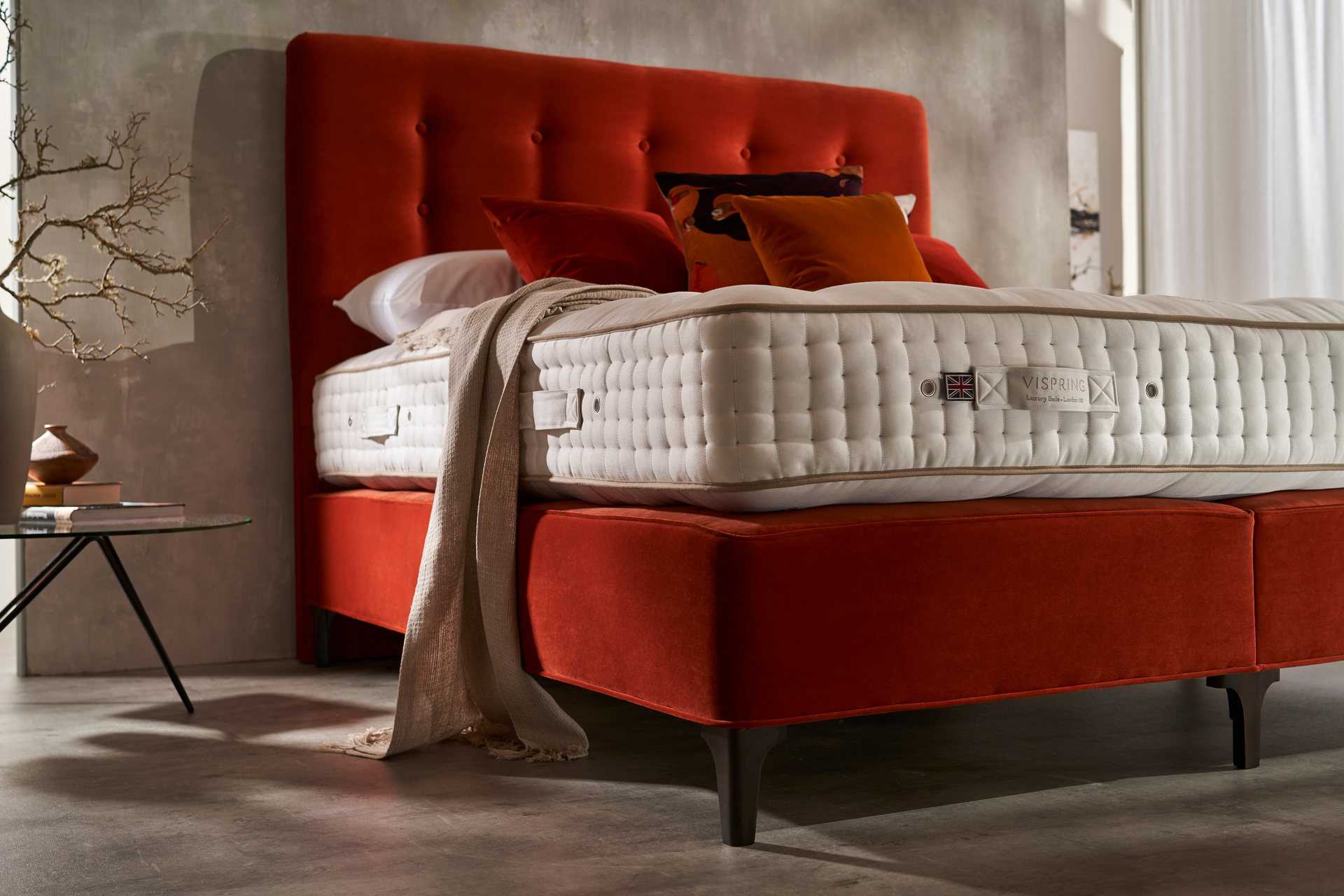
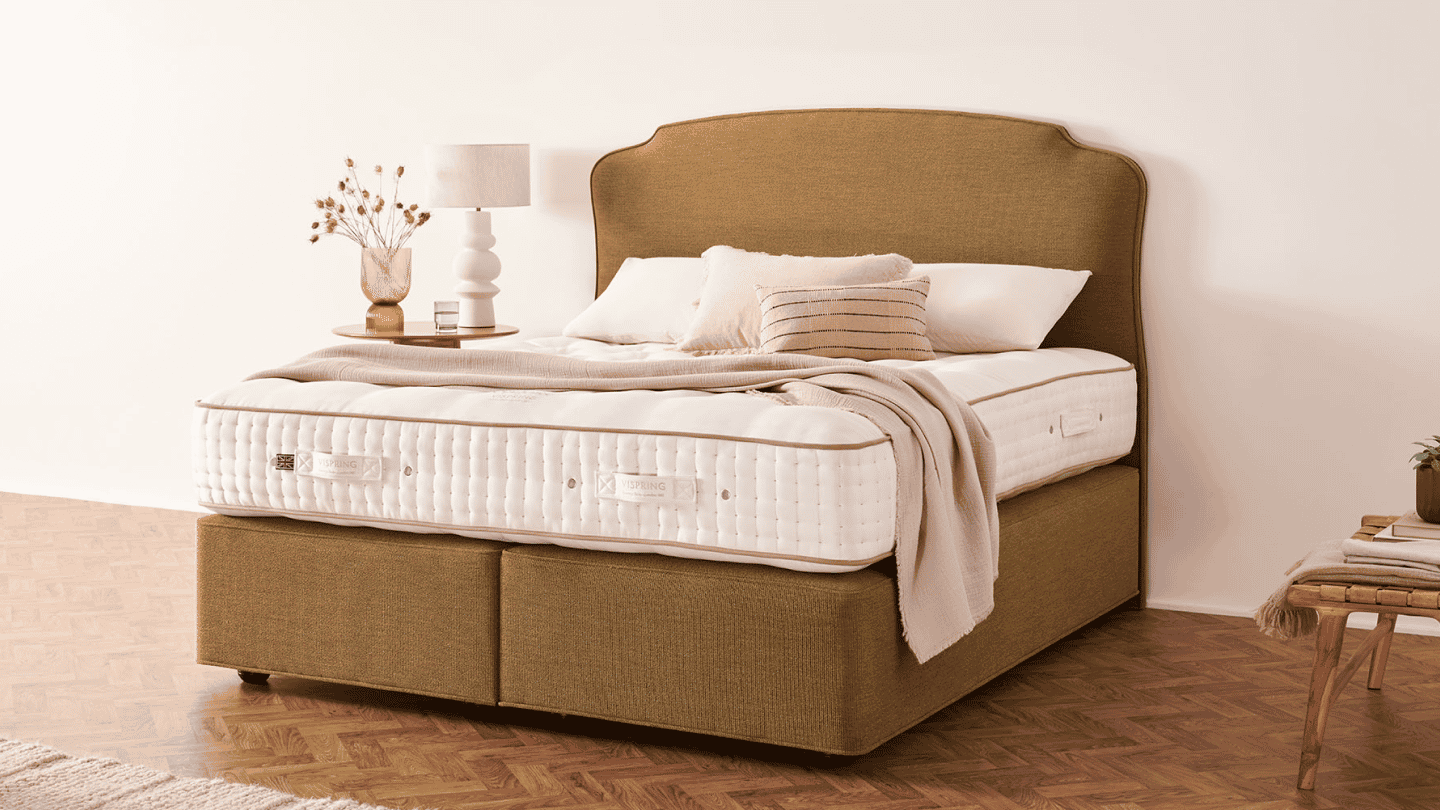
Hand-tufting is another feature that appears in some traditional luxury mattresses. Tufts pass through layers of upholstery to help hold them in place and reduce shifting. The visible tufts are part of the construction, not simply a decorative flourish, although the presence of handwork alone does not establish that a mattress is right for you.
Ask how the fillings are secured and what maintenance the manufacturer recommends. Some mattresses are designed to be rotated periodically; others have a defined top and bottom and should not be flipped. Following the specified care routine can help preserve the intended feel. The mattress should also rest on a base that is compatible with its construction, since an unsuitable foundation can affect stability and, in some cases, warranty coverage.
How to compare luxury mattresses fairly
When two premium options sound equally appealing, compare like with like. Record the key specifications and test each mattress under similar conditions. Be wary of treating one number—price, depth, spring count or a firmness rating—as a shortcut for overall quality.
- Construction: Identify the support system and the order of the comfort and upholstery layers.
- Feel: Test the mattress in your usual position and give yourself time to settle.
- Movement: If you share a bed, check whether one person’s movement noticeably disturbs the other.
- Edge: Sit and lie near the perimeter to assess stability and usable surface area.
- Materials: Ask what each material does, where it appears and how much is used.
- Foundation: Confirm which bed base or slat arrangement is appropriate.
- Care: Check whether to rotate or turn the mattress and how to protect its surface.
- Terms: Read the warranty, trial conditions and delivery or return details before purchase.
Take notes during testing. A mattress can feel impressive in a short visit yet leave you uncertain about a particular feature later. Write down what felt comfortable, what did not and what questions remain. If you cannot try a mattress in person, look for detailed construction information, a clearly explained trial period and practical return terms. Check the conditions carefully: a trial may include limits, fees or required setup steps.
Durability and value beyond the price
Luxury pricing may reflect materials, labour, construction complexity, brand positioning, distribution and other factors. A higher price does not guarantee longer life or a better fit. Consider value in relation to the complete specification, the expected care routine, the warranty terms and how confidently the mattress meets your needs.
Durability depends on more than a single material or spring count. Upholstery quality, how the mattress is assembled, how evenly it is used, the foundation underneath it and the care it receives can all matter. Ask what the warranty covers and what it excludes. A warranty addressing manufacturing defects is not necessarily the same thing as a promise that the mattress will retain its original comfort indefinitely.
Protective bedding can help guard against spills, stains and everyday wear, but check that any protector fits the mattress profile and does not interfere with the feel you chose. Follow the care instructions for the mattress and accessories. Avoid assumptions about cleaning: some natural fillings and covers require particular treatment, and excess moisture can damage materials.
Questions worth asking before you decide
A good product explanation should make the construction easier to understand, not more mysterious. Consider asking:
- What is the support system, and how are its components arranged?
- Which layers create cushioning, and how thick are they?
- Does the quoted coil count refer to my chosen mattress size?
- How is the perimeter reinforced, and can I use the full surface?
- Which foundation is recommended, and what spacing is required for slats?
- Should I rotate the mattress, and how often?
- What are the exact warranty and trial conditions?
- Are material or environmental claims supported by documentation?
If the answers are vague, ask for a written specification. Product descriptions can differ between sizes or change over time, so confirm the details for the exact model and configuration you are considering. This is especially useful when comparing spring counts, mattress depth, available tensions or foundation options.
The best luxury mattress is the one that fits your sleep
Luxury mattress construction can be fascinating: layered coils, carefully chosen fibres and thoughtful finishing all offer clues about how a bed is designed. But the most elaborate specification is not automatically the most comfortable. The right mattress is the one whose support, cushioning, temperature feel and practical requirements work for the person sleeping on it.
Look past the label and consider the full build. Test the surface in your usual position, examine how the edges respond, learn what the materials contribute and confirm that the foundation and care instructions suit your home. When you compare luxury innerspring mattresses this way, you can weigh craftsmanship without mistaking it for a universal promise—and make a decision based on the sleep experience you actually want.